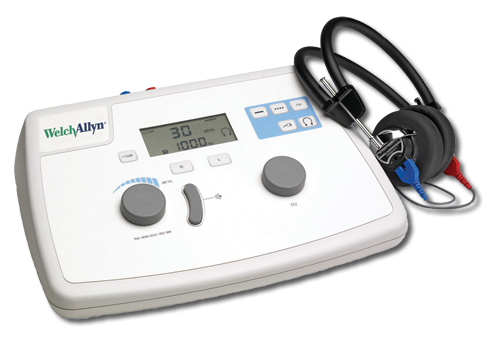
The journey of audiometric equipment, from its invention to modern developments, has contributed significantly to advancements in hearing assessment capabilities. Encompassing a variety of technologies, these devices have transformed how we measure, diagnose, and treat hearing loss.
The invention of hearing tests traces back to the late 19th century when American physician Harvey Fletcher developed the first audiometric equipment. Known as the audiometer, this rudimentary device helped measure a person’s hearing threshold for different frequencies. Despite its simplicity, it laid the foundation for the complex technological advancements that we experience today.
Throughout the years, audiometric equipment has come a long way. Analysis of the historical milestones during this journey helps to establish a context for understanding current progressions and innovations in this field.
One of the most significant milestones was the introduction of automated audiometry in the 1960s. This development eliminated the dependency on a technician to conduct the test, resulting in a more precise and comfortable experience for the patient. The subsequent years saw further advancements, such as the evolution of digital audiology and the development of evoked potential testing.
In the 1980s and 1990s, digital technology began to revolutionize the field of audiology. With the integration of advanced digital signal processing features into audiometric equipment, the hearing evaluation process could be precisely controlled, and the results were more accurate. Additionally, the size of audiometric testing equipment reduced significantly during this period, making it more portable and accessible.
From headphones that could fit comfortably in the ears to auto-fittings that can adjust the hearing aid based on an individual’s specific needs, the field of audiometric equipment continued to evolve into the 21st century. The newer equipment now also integrates wireless and Bluetooth technologies, allowing for real-time testing and analysis of the patient’s hearing capabilities.
Today, we have highly sophisticated equipment that provides clinicians, audiologists, and hearing healthcare professionals with better, more accurate information to diagnose hearing loss. Over time, audiometric technology has transformed from a simple device to an intricate system that assists in delivering personalized, effective treatments to patients.
As advancements in technology continue to drive innovation in the field, we can expect the future of audiometric equipment to not only continue improving hearing assessment capabilities but also expand the horizons of diagnostic and therapeutic possibilities for hearing healthcare professionals.
In the contemporary setup, audiometric equipment constitutes a multitude of sophisticated systems that take advantage of cutting-edge technologies to make hearing assessments maximally efficient and accurate. Starting from the basics, audiometric equipment extensively uses digital platforms, for both hardware and software, to perform regular tasks. The software, developed by proficient engineers, takes into account the various algorithms and protocols required for each test conducted during an audiometry test.
The hardware aspect of audiometric equipment, on the other hand, consists of multiple sensors, microphones, speakers, and signal processing units that work in concert to capture relevant data. A typical modern audiometric booth is equipped with a set of calibrated earphones and headphones, which are central to the process of hearing assessment. They administer specific frequencies of sounds to the patient, which correspond to different ranges of hearing loss, with the patient required to respond depending on the sound he/she is able to hear.
The response of the patient is often captured either through pressing buttons or a key-press system, which provide the most straightforward feedback mechanism. Furthermore, audiometric machines can also use more sophisticated systems, such as reacting to movements or facial expressions, based on the type of equipment at hand.
It’s worth mentioning that microphones also play a key role in the audiometric process, as they operate in combination with signal processing devices. Microphones effectively record and transmit the patient’s response to a database which comprises of a sophisticated software program that further analyzes the responses.
These software programs are often programmed with remarkable precision, using detailed programming algorithms developed by experts in the field. The resulting data analytics provides information on the patient’s hearing capabilities, allowing for precise determination of any hearing impairment.
Summarily, modern audiometric equipment leverages these different components and software features to perform a confluence of diagnostic tasks. The hardware components capture and transmit signals, whereas the software platforms process this information to provide insights into an individual’s hearing capabilities. It’s this interplay of efficient hardware and intuitive software that substantially enhances the overall audiometry process and, in turn, improves patient outcomes.
But the utility of these innovative audiometry methods doesn’t end there. They also play a pivotal role in campaign-centric efforts, such as screening programs, where they have proven to be incredibly effective by expediting processes and enhancing their precision, enabling healthcare professionals to detect hearing impairments at an earlier stage.
Audiometry has significantly evolved over the years, and there have been several breakthroughs that have revolutionized the field. From the invention of the tuning fork to the development of state-of-the-art digital devices, numerous key innovations have brought about improvements in hearing assessments, making them more precise and user-friendly.
One of the most notable advancements in audiometric technology is the transition from analog to digital systems. Analog audiometers, the first generation hearing testing devices, have now been replaced with digital equipment, which offer several benefits:
Digital audiometers are equipped with various features that contribute to a better overall performance, such as computer-controlled testing environments, calibration modules, and software that accurately analyzes the test data. These factors, combined with the user interface, make digital devices easy to operate.
Another critical innovation in audiometry is the development of Otoacoustic Emissions (OAE) and Auditory Steady-State Response (ASSR) tests. These tests measure the function of your inner ear and auditory nerve, respectively, by registering the echoes produced in response to sound stimuli.
Otoacoustic Emissions (OAEs): This non-invasive test is conducted by placing a small probe in the ear canal and sending acoustic signals into the ear. The emitted sound induces an echo within the cochlea, which is then detected by the probe and analyzed by the audiometer. OAEs can be used in both children and adults and have contributed to early detection and intervention in cases of hearing loss.
Auditory Steady-State Responses (ASSRs): This objective measure of hearing function is used to assess the auditory nerve’s response to constant sound stimuli. The patient is fitted with electrodes on their head and ears while the audiometer sends repetitive auditory signals to detect the brain’s response. The test helps clinicians diagnose hearing loss, particularly in children and patients with cognitive or communicative challenges.
Advancements in telemedicine have also transformed the world of audiology. Remote audiometric testing allows clinicians to perform hearing assessments on patients in distant locations without the need for an in-person visit. This innovation has dramatically improved accessibility, particularly for those who may find it challenging to attend appointments in person due to geographical, financial, or physical constraints.
Digitalization has significantly impacted the field of audiology, transforming the way audiometric equipment operates, and delivering more efficient and precise results. The integration of digital tools and technologies has not only improved the accuracy of hearing assessments but has also enhanced the entire process of patient management. In the following discussion, we will explore the myriad ways in which digitalization has made audiometric equipment more efficient, leading to better patient outcomes.
One key aspect of digitalization in audiometry is the incorporation of digital components in the equipment itself. Digital signal processing ensures that the hearing assessments are conducted more accurately, as compared to the analog systems of the past. This not only makes the measurements more precise but also increases the resolution of the sound signals, allowing for more detailed and custom-tuned hearing tests.
Digitized audiometric equipment utilizes electronic medical records (EMR) systems, which has significantly improved the process of managing patient data. Storing and retrieving information electronically allows for more efficient and secure management of patient data. Additionally, the sharing of digital files enables seamless collaboration between audiologists and other healthcare professionals, enhancing the overall quality of care provided to patients.
Digital audiometry allows for a more modern and comforting environment during assessments, which can positively affect the patient’s experience. The digitization of audiometry equipment enables the use of tele-audiology, allowing audiologists to remotely diagnose and manage hearing disorders. This can be incredibly beneficial for patients who may otherwise find it difficult to access traditional in-person, clinic-based appointments.
The digital nature of audiometry equipment means that data can easily be combined with other technologies, enhancing the overall diagnostic and therapeutic approach. For example, the data obtained from hearing tests can be used in conjunction with machine learning algorithms to identify patterns and refine treatment strategies. This allows for a more personalized and effective approach to hearing healthcare.
Digitalization has also influenced the way audiometry services are marketed, taking advantage of the ever-growing digital presence. Audiologists can use search engine optimization (SEO) and social media marketing to reach a larger audience and increase awareness of their services. Additionally, digital patient reviews and testimonials can help build trust among potential patients seeking audiological care.
The widespread adoption of digital technologies in audiometry has made it increasingly easier to conduct large-scale clinical trials and gather data for evidence-based treatment. This has resulted in the development of new treatment methods and the improvement of existing ones. As digitalization continues to evolve, the field of audiology will likely see even more innovative and evidence-based treatment approaches emerge.
The rise of personalized medicine has greatly influenced the field of hearing healthcare, and personalized audiometric devices are playing a crucial role in this revolution. These devices are designed to provide individualized treatment for hearing loss, customizing each diagnostic and therapeutic experience for each patient. This significant shift from a one-size-fits-all approach to a tailored strategy is reshaping the way clinicians diagnose, manage, and monitor hearing loss.
Personalized audiometric devices consist of a range of technological advancements, including smartphone-compatible applications, wearable technology, and customized hearing aids. These devices collect vast amounts of individual data, creating highly accurate patient profiles that can be used to fine-tune their audiological treatment plans.
The introduction of personalized audiometric devices has brought a multitude of benefits:
The future of hearing healthcare is set to become even more personalized. Advanced algorithms and machine learning are expected to further refine the evaluation and treatment of hearing loss. Additionally, advances in materials science could lead to even smaller, more comfortable hearing aids with enhanced sound quality.
Furthermore, as genetic testing becomes more prevalent, it’s conceivable that audiologists will one day be able to predict an individual’s hearing trajectory based on their genetic profile. This would allow for proactive interventions aimed at delaying or preventing hearing loss.
As personalization continues to drive innovation in hearing healthcare, it’s clear that the era of one-size-fits-all solutions is over. The integration of cutting-edge technology and personalized care is redefining the patient experience and promising a future where everyone can access individualized hearing care tailored to their unique needs.
In recent years, we have witnessed remarkable advancements in audiometric equipment that have significantly improved both the accuracy and the patient experience of hearing assessments. These improvements are primarily due to advances in technology, increased comfort, and user-friendly designs, making the process less intimidating and more comfortable for the patients.
One of the major technological advancements that has contributed to enhancing the patient experience is the integration of artificial intelligence (AI) and machine learning algorithms. These technologies help in automating the entire testing process, reducing its duration and increasing the accuracy of the results. For example, AI-powered audiometers can automatically adjust the frequency and intensity of the sounds emitted during the test to account for factors such as room noise and the patient’s hearing threshold. As a result, patients experience a more efficient and personalized testing experience, with reduced chances of requiring retesting.
Moreover, the integration of digital signal processing (DSP) technologies enables audiometric equipment to analyze and process sound signals with significantly higher precision compared to analog systems. This leads to more accurate testing results and reduces the risk of misdiagnosis or inappropriate treatment recommendations.
One major factor that determines patient satisfaction during audiometric testing is the comfort of the equipment used. Modern audiometric devices incorporate ergonomic designs, lightweight materials, and improved fit, making them more comfortable for patients to wear during assessments. For example, earpieces with adjustable headbands and soft cushions reduce pressure on the patient’s ears, resulting in a more comfortable testing experience.
In addition to comfort, user-friendliness plays a crucial role in improving patient experience during audiometric testing. Modern audiometric equipment incorporates simple, intuitive interfaces, allowing patients to be more involved in the testing process. Features such as touchscreens, voice commands, and real-time feedback on their hearing performance help patients to feel more in control and better understand the assessment process. This increased engagement contributes to greater patient satisfaction and potentially improved clinical outcomes.
Lastly, advanced audiometric equipment has contributed to the streamlining of the testing process, making it faster and more efficient. For example, some devices are capable of automatically detecting the patient’s hearing threshold without requiring them to respond to every sound presented. This accelerates the testing process and reduces the burden on patients, particularly those with limited patience or cognitive challenges.
As we gaze into the crystal ball of audiology, industry experts provide us with insights and perspectives about the future of audiometric equipment. In the coming decades, we can expect a continuous evolution, shaped by innovative technologies and the ever-rising demand for personalized patient care.
“AI has the potential to revolutionize hearing healthcare by automating diagnostic and fitting processes, enabling uniquely personalized treatment programs, and transforming the way we interpret data,” says Dr. Christopher Spankovich, a leading audiologist at the University of Minnesota. As artificial intelligence (AI) and machine learning (ML) technologies continue to advance, they will undoubtedly become more integrated within audiometric equipment, making diagnosis and treatment more accurate, efficient, and customizable.
According to a study published in the National Center for Biotechnology Information (NCBI), AI and machine learning applications hold great potential in transforming audiometric equipment for diagnosing and treating hearing loss, leading to more personalized and effective treatments.
The Internet of Things (IoT) will play a significant role in the future of audiometric equipment. By connecting a wide range of devices, IoT will facilitate seamless data exchange, real-time monitoring, and prompt alerts for clinicians managing patients with hearing loss.
Dr. Paige Wickham from the University of Queensland shares her vision of interconnected hearing devices, saying, “IoT connectivity in audiometric equipment will have profound implications for future hearing care. Continuous data feeds and real-time monitoring will enable professionals to respond swiftly to their patients’ needs, improving patient outcomes over time.”
A research article published on the NCBI emphasizes the integration of IoT technology in hearing aids and cochlear implants, which may open new avenues for audiometry services and enhance patient understanding of their hearing profiles.
The advent of wearable technologies has already started to benefit the field of hearing healthcare. With the wearable market expected to grow, we can anticipate the development of more sophisticated devices that cater to the diverse needs of hearing-impaired individuals.
Dr. Audrey Lancefield, a specialist in wearable hearing technologies at the University of Cambridge, predicts, “Audiology will see an integration of more advanced wearables that may act as both diagnostic and treatment tools, providing precise assessment while enhancing sound quality for hearing-impaired individuals.”
The future of audiometric equipment is undoubtedly bright, with groundbreaking innovations on the horizon. The integration of AI, IoT, and advanced wearable technology will revolutionize the audiometric landscape, forever transforming how we screen, diagnose, and treat hearing loss. As we look forward to a more personalized, efficient, and technologically-advanced approach to hearing healthcare, now is the time to embrace these exciting advancements and look towards an era of improved patient outcomes.
Category: Audiology
© 2026 www.audresources.org. All rights reserved.